
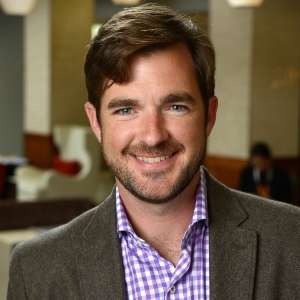
Speaker: Andy Higgins
Principal, ZS Associates
Medical Affairs Professional Society
Speaker: Sarah Clark
Head of Medical Excellence & Operations, Novo Nordisk Rare Disease
Medical Affairs Professional Society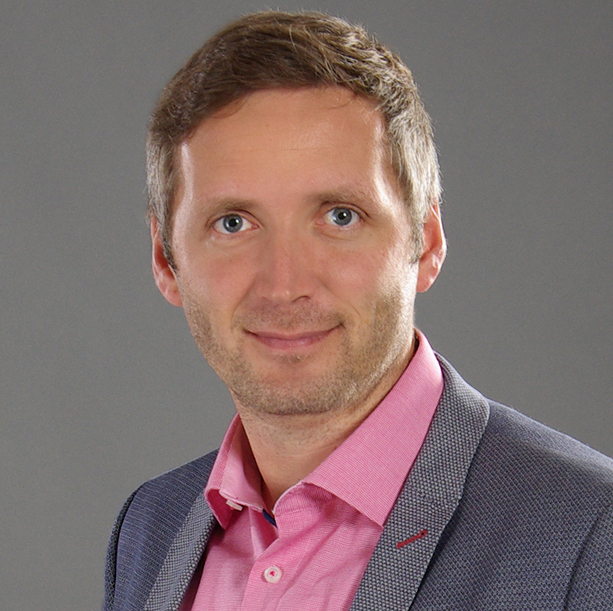
Speaker: Andreas Gerloff
Director, Medical Excellence Operations, Daiichi-Sankyo Europe SBU
Medical Affairs Professional Society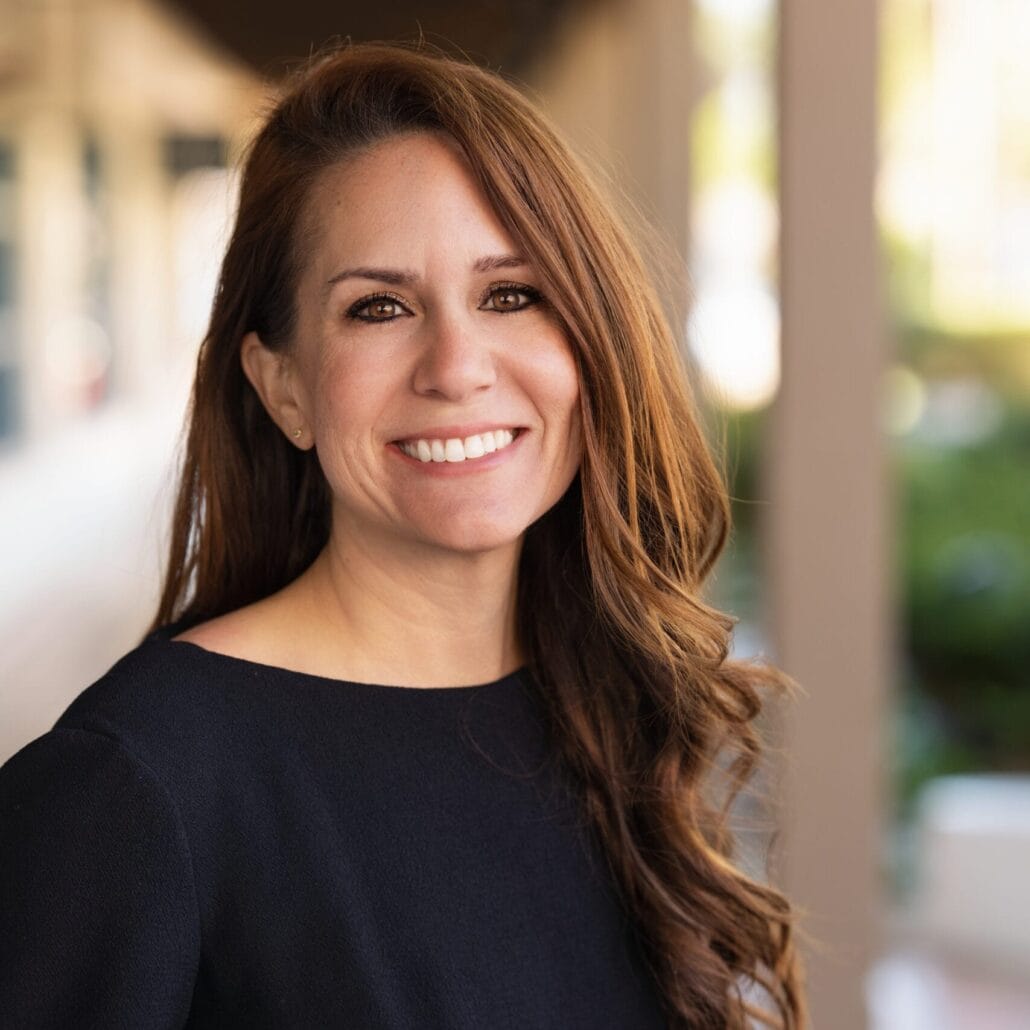
Speaker: Joanna Gonsalves
Head of Field Medical Excellence at Amgen
Medical Affairs Professional SocietyFollowing is an automated transcription provided by otter.ai. Please excuse inaccuracies.
00;00;00;20
Garth Sundem
Welcome to this episode of the Medical Affairs Professional Society podcast series: “Elevate”. I’m your host, Garth Sundem, Editorial Director at MAPS, and today we’re offering perspectives across industry of impact measurement in Medical Affairs, along with a look at what makes these approaches successful. So a survey at the MAPS 2025 Americas Annual Meeting, found that 90% of medical organizations say impact measurement is a pain point. We talk about the theory, and today we’re digging in on some of the practicalities of impact measurement, including implementation tools and frameworks. Joining us are Andreas Gerlof, Medical Excellence Operations Director, Daiichi Sankyo Europe SBU. Sarah Clark, Head of Medical Excellence and Strategic Scientific Communication, Rare Disease at Novo Nordisk. Joanna Gonsalves, Head of Field Medical Excellence at Amgen. And Andy Higgins, Partner, European Medical and Evidence Practice Lead at ZS Associates, who has worked with each of these groups and can help us understand more broadly what works and what might not. So let’s get right into it. Sara, what have you seen for impact measurement? Take us into the world of implementation and how this works. And maybe, some scary pieces of impact metrics as well. Where are we at?
00;01;37;04
Sarah Clark
Thanks, Garth. And really nice to be here. I’m not surprised that medical impact measurement is a really hot topic across the industry. I think most medical teams have been working for a long time now, and how do we actually translate the work that we do into something that’s clear and understandable for the organization, but also make sure that what we’re doing is the activities that drive the most impact. So when I think about medical impact, to me, we always have to start with what is the goal of the Medical Affairs organization? Why do we exist? Right. And what we are really, clear on for all our team is that Medical Affairs exists to positively impact and change clinical practice. We want patients to receive the optimal treatment and be and have kind of the best possible outcome that they can have. And if that’s our North Star, if that’s our goal, then medical impact for me is about how do we translate that into something that’s measurable. And this is where we really get stuck in the industry, because there is a lot of quantitative data that is most easy to find. And but it’s been very difficult to connect that quantitative data up to something that actually shows that you’re having the impact that you want to have. So we’ve been really lucky to, bring into our team a framework actually created by, say, this, I’m really happy to have. And here. We call it the horizons framework. It has a more snappy name that Andy can probably explain. It better, but, we think about medical impact over horizon. And when we say horizon, for us that means, both a horizon in terms of time, but also kind of laddering up towards that goal of impact. The far off horizon, the horizon three is the one that’s in the long, longer term from today. And that’s where the clinical practices actually changed. But actually measuring clinical practice change is quite difficult to do. You need data and you need time. And so in order to be able to measure that we think backwards a little bit earlier in the process. And that’s really about what’s the HCP knowledge shift. And and and and knowledge change that they would need to experience or have gone through that when the patient stands there in front of them, they do something differently. And so our horizon two in the more mid term is the Http knowledge change. And that’s a really measurable thing for us in pharma is the different ways to consider how you might measure knowledge change. And then in the short term, what we are most comfortable in Medical Affairs is what are the medical tactics that I’m going to do? What am I actually going to execute in my medical plan? Where’s my money going with my time and effort going? And then when you put those three parts of the puzzle together, what you can actually see is that if I choose tactics that are actually intended to make the right behavior knowledge shift in my healthcare professional, you will actually then in the long term, have this North star of the knowledge of the clinical practice change connected. So to me that’s that’s kind of the framework we use. It helps us, know what our focus should be. It helps us make sure that we invest our time and energy into the activities that really take us towards that true north star of practice change. And so I hope that’s interesting. I don’t know, maybe, yeah, I know what do you guys do and what’s your experience across the industry?
00;05;10;04
Joanna Gonsalves
So I love what you are saying because, you know, when I think about the last several years or decade of really trying to measure impact, I have often and I know folks in industry, we think about what. And so instead of going all the way back to what are we actually trying to do? And then how are we going to use measure measurements or tools to to show for having that impact, which is really what we should be focusing on, not what can we measure. And then pushing that into a dashboard and to try to like show the impact to the medical organization. So I think the process you described is really where I see the industry going, where we’re trying to go is really what is the medical organization trying to do? What is our goals? What are the tactics we’re going to take to achieve those goals? And then thinking about how do we measure that? So instead of thinking, what can we measure first really thinking about what is our, as you said, Sara, our North Star, what are we trying to educate on? What kind of patient care gaps might we be trying to close? And then thinking about how do we measure that in each stage? And I love the horizon kind of process that you described. And each stage there’s a way that you can kind of measure, are we having that impact? And I really think that’s the direction we need to go instead of just trying to pick and choose, you know, different things that we have the ability to measure but might not really show the impact that we’re trying to have. And the care gaps that we’re trying to close.
00;06;39;03
Garth Sundem
Andreas.
00;06;39;25
Joanna Gonsalves
Andreas, that’s from you.
00;06;41;14
Garth Sundem
Yeah.
00;06;42;24
Andreas Gerloff
Yeah. Thanks. So, so first of all, for having me, I really like also this, the explanation from Sara around, you know, actually start with the fact of why do we exist. But I also would like to extend that on, you know, what is our current, product portfolio and what do we want to measure around that’s at this hour, right. And again, the impact story is there for a few years now. And again, no one feels has really cracked the nut. Right. But the good news is there are more and more publications, more and more frameworks really built around that so that everybody can also make that work for their own reality. Right. And and again, the Ryzen framework is a good one because it really leads you from, you know, from the activity itself also down to the patient outcome. And wherever you are with your product, with your life cycle, you can actually adapt that to your individual needs. Right? Because again, if you are in a pre-launch scenario with your product very different from a very mature product in the way of what you want to measure from the activity side, but also on the patient outcomes. Right? So a lot of interesting points you guys brought up.
00;07;44;22
Garth Sundem
Okay. So what I’m hearing from the group is that maybe you start with a desired outcome. You know Sarah brings up change in clinical practice. And then you look at the intermediate endpoints that that lead you to that desired outcome. And then you look at the tactics that are required to get each of these sort of intermediate endpoints. Andy, is this the state of the art that you see from the across industry and impact measurement, or how do you. Yeah, in the process?
00;08;11;01
Andy Higgins
Yeah, I know it’s it’s yeah. It’s interesting. Maybe one quick reflection. I think it’s interesting that, all three of you sort of started with, what do we even want to measure?
00;08;20;27
Garth Sundem
Yeah.
00;08;22;14
Andy Higgins
Because in, in a sense, yeah. So this is really hard. It’s especially hard for medical, because if you think about our commercial colleagues, they don’t have to ask that question, do they? So, you know, it’s pretty straightforward what they’re measured on and, and, they’re sort of assigned their metric kind of medical has to do the really hard work of determining the metric on their own. So already it’s quite difficult. But yeah, I think this, this, this sort of concept of measuring across horizons, I think is, what what’s not would not new people have been measuring horizon one and activities for a long time. People measure things in horizon two, which are about levels of scientific understanding, alignment with your scientific point of view. People have been measuring, you know, are you actually changing how care is delivered? But I do think what’s unique is pulling all of those, the, those three things together in a unified, cohesive, logically connected way. Often what we see is a lot of excitement, enthusiasm about measuring, things within those, but not necessarily connecting them all together. And I think some of that, some of the pitfalls that we see are sometimes there’s a very there’s there’s a bias towards a very analytically driven, you know, regression equation based kind of approach to say, we know B because of a, and I think that, that’s very difficult. And, and if you go down that path, you, I think very quickly reach a point where you’re spending more time and effort trying to measure the impact, then you are actually delivering impact. And so I think there’s just some power in the simplicity of just having very clear, simple metrics. Not a ton, but are they sound does, you know, if you’re if you’re trying if you’re if your perspective of, it’s the unmet need you’re trying to solve for is, is, faster diagnoses and you decide that, improving testing rates, is a way to accelerate accurate diagnosis, then your activities are around talking about about the role and importance of testing and how to do testing. And then in horizon two, you’re measuring, do people understand testing? Do they know, do they agree that if you if you, test more, patient outcomes are improved and then you go to real world data sets and can you see, changes in testing rates, you know, within the relevant geographies or sort of, you know, target Https, and we’re not doing math there. We’re not saying we’re not building a regression equation to get the p value. We’re just saying, here’s what we did, here’s why, and then here’s the outcomes that we saw. So, yeah, I think, I think that, you know, I really like what everybody said so far. And, and we’re starting to see a little bit more momentum in this way.
00;11;24;02
Garth Sundem
Well, let me ask. I’ll go ahead. Andrea. Sorry.
00;11;27;08
Andreas Gerloff
So sorry. Now, I just wanted to comment very quick on what Anita said because for me, added frameworks and again, the horizon framework, but also other frameworks had to number one Osprey. But help with my thought process in general. Right. Because again, it is pushing us outside of our comfort zone of measuring activities. Right? So number one, but I believe at the same time it helps us with the storytelling. So I think for me it’s not about, it’s not about, oh, counting numbers is bad and effectiveness KPIs are bad, but they are not the whole story. Right. And at the end of day one, say what are the activities? What is the belief change? What is a clinically about, clinical practice change? And ultimately, what is the, what is the patient outcome change? And if we put all those KPIs together, we have a very good story to tell. And I think that is very important. And that’s also where we need to improve.
00;12;17;10
Garth Sundem
Okay. Let me let me ask real quick. So Andy, you bring up an important point and that is that commercial doesn’t have this problem. They have a very obvious metric that they are measured against. But then this group also brings up change in clinical practice. And Andrea’s one step further, patient outcomes for all Medical Affairs departments across all companies. Is this what we ultimately should be measuring against? Of course, we’re going to maybe have different intermediate things to hit on the way, but should we be putting change in clinical practice and or improved patient outcomes? The measurement of at the end of every impact assessment that we do, is this our North star? The same way commercial has the North Star eventually. Is this what we should be measuring against in all cases? What is the group think? Andy, what do you think?
00;13;16;21
Andy Higgins
Yeah, it’s it’s a good provocation. I think for for depend. It depends. God, I hate to say it depends. As the consultant on that group, it depends. So, But I think it does. So I guess I think about the core mandate of Medical Affairs as being three things. I think one, identifying and cultivating differential medical value. That’s true. Building compelling, differentiated, integrated evidence plans. I think two is about enabling evidence based health care decisions. I think that’s probably where sort of closing the care gaps and improving care probably is where you anchor your measurements to. And then I think, at least from my perspective, the third thing is around generating insights that inform strategic decision making. So if we were to and I’m actually curious if, if everybody here sort of agrees with that, but if, if we were to take that as a premise and I think at least for that second one, enabling evidence based health care decision making, I think for sure that these are the kinds of things we want to measure.
00;14;18;26
Joanna Gonsalves
I think, Andy, I would agree with you. I think the one you know, to your question, like I don’t I think it’s not a one size fits all. Whereas, you know, we mentioned like it might be on the commercial side, selling of a product on the medical side, I think for every product, every therapeutic area within a company, it’s going to be a little different. And you go back to what Sarah saying, you go back to that. What is your medical objective for for whatever product therapeutic area you’re supporting, and then you’re going to kind of go back or what are you trying to do, and then you’re going to go backward and see what you’re going to actually measure. But I think it’s not a one size fits all. It might not be for every therapeutic area and every product. The same thing. It’s going to be a little different. There’s going to be some similarities. But I think what you’re measuring is going to be different, which is what makes this a little harder, is that you’re going to have to have an individualized approach for every space.
00;15;13;20
Sarah Clark
I mean, I think one of the really nice things about the thought process, though, is that it ensures that medical is an externally facing organization. And I think that’s where we really have so much value to add to the health care system. You know, and I think because of the way that this framework makes you think about that external impact, it also makes you ensure that you’re where you’re spending your internal time is also still aimed at that external impact. So I think that’s really important. Just as we think about modern Medical Affairs, we aren’t an internally facing organization. We have to think about the external environment, the health care systems that are going to have to change so dramatically in the coming years. And I think the other really important thing is it’s it’s it’s hard for some medical teams, I think, to maybe even see themselves as a team that changes clinical practice, medical have a tendency to be very, very evidence based, you know, and so when when you sometimes have these conversations, people get uncomfortable because they’re like, but, you know, changing clinical practice isn’t just up to me. And the things that we’ve done, you know, it’s there’s so many other factors in that. And I and I think the way that we explain it is like, it’s not meant to be the latitude, longitude or the precise coordinates. And he’s talking about it’s meant to give you the North Star direction to make sure that the tactics you choose to focus on are the ones that will give you the most strategic impact. Right? It’s not about being precise that you yourself and that activity has moved that specific needle, but the ones that you choose to focus on could be part of moving that needle. And actually, if you look at like medical tactical plans around the world, I guess there’s a bunch of stuff on there that people maybe look at. And one of them, I’m wondering why we started that, like we’ve been doing it for, you know, five years or six years, and it’s kind of who we are. And and you wonder why? Why do you do that? You know, and I think this framework can help you really make some of those tough decisions of like, what do you really prioritize?
00;17;13;28
Garth Sundem
So, Sara, you bring up a couple good points. You know, one is that impact is measured in the external environment for Medical Affairs. It’s not that we did stuff and it was nice to show our boss that we we did stuff. It’s that we had impact in the external environment. So you also bring up, you know, the challenge of correlation and causation in medical impact. You know, hey, we’ve been doing this stuff and clinical practice happened to change or we did this stuff and we caused clinical practice to change. How do groups address that? I’ve always wondered this. You know, how do we show that what we did actually created the results. Not only was correlated with changes that happened to be, you know, already underway in the external landscape, what is what is this group think? How do we really measure that, that our actions matter?
00;18;12;24
Andreas Gerloff
So again, personally, I believe again, we we need to change our mindset around measurement in general, sort of set right. Because again, we need to think is we when you think historically, how we have measured KPIs, not only there was always this clear correlation, right. This number of activities happened by because this have we have plant. Right. So we could measure was like oh yeah success here it’s much more difficult. Right. And you need to basically disconnect or change your mind around, you know, okay that that this is the activity and therefore this is the clinical impact or the clinical behavior that is changing. Right. Very often it’s a combination of different things. However, if it moves you towards your goal and your objective, again, my personal view is still change in clinical practice, change in patient outcome. If you’re able to measure that, use that as an optimal I got. Yes. If there are other external factors coming in to influence that fine right. That’s fine. System moves to towards your objective. If it’s not an objective that is only driven by even by the medical organization, it can be a common goal between medical and commercial to to move some of those components. Right. Also fine. So we need to start disconnecting from you know, there’s this historical way how we have measured those kind of things and even commercial needs to move further in the direction of, you know what, how we can we collaboratively really define objectives, define, success metrics and measure them, you know, in collaboration.
00;19;38;14
Garth Sundem
And how are you seeing these challenges across groups?
00;19;41;26
Andy Higgins
Yeah. I was I was reflecting a bit I think it then the answer to your question, there’s a, there’s a premise, I think, fundamentally baked, into the question you asked. And I think it’s, it’s what is it sort of what is the purpose of measurement? And I at least from my perspective, I don’t know that the purpose is to prove sort of beyond, kind of a doubt, that that you’re creating change. I think the purpose, at least to me, it’s sufficient that the purpose be to give you confidence in the strategic choices that you’re making, which is, maybe, you know, higher, higher order thing, but it takes a lot of time and effort. I mean, even even in the commercial world where measurement activity, you know, the commercial teams, they capture a lot more activity data. And their outcome variable is very clear. And so it is easier to build that regression equation and establish that causation because of those two things. But even in the even in that instance, your your commercial colleagues, there’s still a lot of, there’s a still there’s still a lot of change in the outcome variable that is that isn’t measurable, but they call that carry over. There’s if if the sales force went away tomorrow, physicians would still prescribe products. Right. So so I just I don’t know, my perspective is it’s just it’s so difficult to go down that path. And I don’t know that the that the, you know, I don’t know that the juice is worth the squeeze. Yeah. So that’s built on that.
00;21;18;17
Sarah Clark
I mean, we were at a conference not so long ago. Right. And, one of the things that came up in the discussion was, you know, sales is really being confident with the sales target. Right. And and one of the things when you’re introducing a novel therapy and change you send care is, you know, should medical get a little bit more comfortable with some of the more commercial business terminology around patient numbers, for instance, or getting to understand how a net present value for an asset is actually calculated because they’re a key components of those commercial terms. That actually medical has a huge role in shaping. And I think that’s the kind of the area for medical where you know, we’re still really learning about what our role is in some of these conversations. But I think for us to be a super strong cross-functional partner, we have to have the acumen to understand them and to understand what we do can actually improve some of them, some of those components. Right. And when you think like that and you think about the clinical practice change, then you can start to see that medical becomes, you know, this, this partner in the room that everyone has to talk to. So I think that’s a that’s this may be a different way to think about it is we don’t have to maybe prove ourselves right. We want people to come to us. Okay. Help us with this. You know, this push pull consideration.
00;22;34;12
Garth Sundem
And Sara, thank you for the plug for the, MAPS business knowledge domain course in our Foundations and Medical Affairs program, which will equip everyone with that, vocabulary and knowledge to discuss business. But any to go back to. I mean, I think what you were saying is that, impact measurement can be seen as measuring the success of your strategies. So, yeah, you create medical strategies and you use impact measurements to, to to see if you’re on the right track to see if you’re succeeding. And then you trust that your strategies create impact right in, in the external world. Is that what you’re recommending as a way to measure impact?
00;23;19;15
Andy Higgins
Well, I think yeah, I think Sarah Sarah put it nicely. She said it quickly, but it’s like, are you trying to find the ten digit coordinates or do you just need a map and a compass? Oh yeah. And I think that my, my perspective is, I think as at least for where we’re at today, a map and a compass, it’s more simple, it’s more clear. It allows you to understand at a high level. Are things working or are they not working? And what do you need to do about it? You’ve cheat. So again, to go back to the framework that we’ve discussed, you know, that you’ve changed some beliefs through your measurement, but you’re not seeing a corresponding change in behaviors in practice change. So what’s going on? Okay. Well, maybe it’s not about the level of scientific knowledge. Maybe it’s not about whether or not they agree with your scientific narrative or scientific point of view. Maybe there’s some other factor that you need to go look for. As to why, you’re not seeing the corresponding practice change that you would have expected to see.
00;24;24;05
Garth Sundem
Oh, interesting. And, you know, I love I love the conceptualization of impact metrics, not only as you know, how fast we run the race or something like that, but, allowing changes and adaptations and strategic directions. It’s almost like another form of insights, right? Yeah. Where, where where you’re not just saying, did we win, but you’re using impact metrics to, to inform you how you can be more successful is and that your map and compass is is that right? Andy?
00;25;02;00
Andy Higgins
Yeah. I mean I’d love to hear yeah. Andrea and John and Sarah as well too. Like I’m clogging up the icon up there.
00;25;09;22
Joanna Gonsalves
I agree, I mean, I think you’ve hit upon a really important point and that it’s not just about is the field having an impact, but it’s helping drive your strategy. And you know, as Sarah described, kind of the horizons, if you can look early on, I think Andy gave a great example. You can maybe see that your knowledge is increasing in the area that you’re trying to educate on, but you don’t see a closing care gaps, which is your ultimate goal or whatever that goal is. Then you need to look at that stage, which is why it’s really important to have these earlier measures, not just looking at the end measurement. And if you have these earlier measures and you’re seeing that impact, but not be the end game that you’re trying for, which is closing that care gap or whatever that is, then you have to shift your strategy. And I think the challenge for us is sometimes it can take us a long time even to get those to get to that closing care gap stage. And so by the time we realize that it’s we’ve really spent a long time in that knowledge transfer. And so now we have to kind of change that strategy. So we have to kind of iterate at each stage and really look at the data that we have. And sometimes we don’t have the great like the best data. Like that’s the other thing is it depending on the country or, you know, the level of information that we have, we don’t always have the data that we want to measure that care gap closure. But I think it’s really important to look at each stage and then adjust our strategy at the same time, not just look at these measurements to close the care gaps or to look at measurements to show impact.
00;26;42;11
Garth Sundem
What do you think, Andreas? The purpose of measurement is not only to show that we have one, but to create and adapt strategies that lead toward that win. Is that how you see impact measurements?
00;26;54;12
Andreas Gerloff
Exactly. So. So again, everything that has been said already, I think part of the challenges is also, as Joanna said around the time horizon, right, because it’s very difficult activity numbers, you can measure them immediately, real time basis if you right, clinical impact change or even patient outcome change comes. Maybe, you know, six months, one year, two years down the line. Right. So and that is also sometimes where we have a little bit of conflicting, you know, timelines when it comes to also to commercial KPIs and medical KPIs. You know, we have more think long term. And it may take time, which also requires a certain patience in the organization. Right. So I fully agree on everything that has been said.
00;27;30;09
Garth Sundem
All right. Well let’s leave it there for today. Thanks, Andreas, Sarah, Joanna and Andy for joining us. MAPS members, don’t forget to subscribe and we hope you enjoyed this episode of the Medical Affairs Professional Society podcast series: “Elevate”.

