
Authors

Dr. Mike Taylor
Head of Data Insights, Altmetric
Medical Affairs Professional Society
Dr. Carlos Areia
Head of Data Insights, Altmetric
Medical Affairs Professional Society
Carrie Brubaker
Independent Consultant, Medical Affairs & Communications Strategy, Carrie Brubaker Medical Affairs Consultancy
Medical Affairs Professional Society
James Dathan
Associate Director, BBU Publication, AstraZeneca
Medical Affairs Professional SocietyAlmost two years ago, at a Medical Affairs event in London, I had the thought that we don’t do enough to celebrate our successes, and to recognise the impact that the work done by Medical Affairs teams has. This insight led to three of us (Carrie Brubaker, Carlos Areia and myself) recording a podcast. This year, we’re delighted to be joined by James Dathan of Astrazeneca. We’ve repeated the exercise, and I’ve taken the liberty of adding some personal reflections at the end. Happy New Year!
Mike Taylor
Top Altmetric Score – Clinical Trial Publication
- Tirzepatide as Compared with Semaglutide for the Treatment of Obesity
- Atonne et al
- The New England Journal of Medicine, 393(1), 26-36 – May 2025
- https://doi.org/10.1056/nejmoa2416394
- For a detailed breakdown of the Altmetric attention, click here
This paper contrasts the two best-known GLP-1 drugs for obesity (in the absence of diabetes), finding that injectable tirzepatide was more effective in weight loss and waist reduction (although both work well).
Mike Taylor: Twenty years ago, this therapeutic area (drug treatments for obesity) essentially didn’t exist. The introduction of GLP-1 drugs has been the key driver, and amongst them, semaglutide and tirzepatide have had a dramatic effect on the TA and publication space. The number of publications have increased by a factor of over 3; Altmetrics has grown by a similar factor. These are two big beasts being compared in this paper: given the prevalence of obesity, we shouldn’t be surprised by these numbers — in fact, we should also take a moment to reflect on how many millions of people have read about GLP1-drugs in the mainstream media, heard podcasts, read blog posts, and shared about it on social media. It’s a very real example of the power that our publications have, and how our research can change attitudes and conversations around the world. (And for all those omnichannel nerds out there, check out the diversity of communications here: videos, podcasts, social media, news articles, blog posts, Wikipedia…).
Top Score – Clinical Trial Registry
- Personalized Cancer Vaccine mRNA-4157 and Pembrolizumab in Participants With High-Risk Melanoma (KEYNOTE-942)
- https://clinicaltrials.gov/study/NCT03897881
- For a detailed breakdown of the Altmetric attention, click here
The purpose of this trial is to assess whether postoperative adjuvant therapy with mRNA-4157 and pembrolizumab improves recurrence-free survival (RFS) compared to pembrolizumab alone in participants with complete resection of cutaneous melanoma and a high risk of recurrence. Phase II trial.
Carlos Areia: This trial is a particularly interesting use case as it has an impressive Altmetric score of 1568, which is a lot higher than the respective publication published in The Lancet in January last year (Altmetric score of 354), where results indicated that the combination therapy significantly prolonged recurrence-free survival and demonstrated a manageable safety profile at around 2 years.
The trial has attracted significant attention, particularly following the announcement in late 2022 that the investigational personalized mRNA cancer vaccine mRNA-4157 (V940) in combination with Keytruda (pembrolizumab) met the primary efficacy endpoint in the Phase 2b KEYNOTE-942 trial. This result triggered a surge in media coverage, with news outlets also reporting on the positive outcomes and the potential for this combination therapy in treating high-risk melanoma. Subsequent updates to positive data presentations at major conferences like ASCO have amplified this attention. Typically, clinical trial registrations get little to no attention: this example defies these expectations.
Top Score – Pre-print
- bioRxiv – June 2025
- https://doi.org/10.1101/2025.06.05.657370
- For a detailed breakdown of the Altmetric attention, click here
SB000 represents the first single-gene intervention to rejuvenate cells from multiple germ layers, with efficacy rivalling the Yamanaka factors. Yamanaka factors are four transcription factors that can reprogram adult somatic cells back into induced pluripotent stem cells. Multiple readouts showed that SB000 treatment rejuvenates human fibroblasts and maintains transcriptomic and functional measures of fibroblast identity, without activating pluripotency. Further, rejuvenation generalizes to keratinocytes, with potency matching or exceeding that observed by treatment with Yamanaka factors.
Carrie Brubaker: The inappropriateness, or even danger, of induced pluripotency for therapeutic applications is well-described. In contrast, this pre-print introduces cellular rejuvenation without pluripotency, creating a lot of buzz, particularly on social media. Nevertheless, peer review of these data, their experimental replicability, and a comprehensive phenotypic and safety assessment of treated cells are all needed.
Mike Taylor: Last year’s Top Preprint scored very highly on social media — largely as a result of heated conversations on the platforms. Although this year’s also attracted a lot of conversations online, these are largely from the scientific and clinical communities, who are looking forward to seeing “where this goes next”.
Top All-round Highest Score and Top Social Media Sentiment – Clinicians
- Patient-Specific In Vivo Gene Editing to Treat a Rare Genetic Disease
- Musunuru et al
- The New England Journal of Medicine, 392(22), 2235-2243 – May 2025
- https://doi.org/10.1056/nejmoa2504747
- For a detailed breakdown of the Altmetric attention, click here
In this paper, the authors describe how a newborn child, who’d be diagnosed with a rare genetic disorder — with an estimated 50% mortality in early childhood — is treated with a custom base-editing therapy. The treatment appears to have been successful with no significant adverse effects.
Mike Taylor: This publication was included in two of our Top Ten categories: Highest Physician Sentiment on Social Media, and overall Highest Altmetric Score — both are unsurprising. Treatments of this type will revolutionise patient care in the decades to come, transforming life-shortening diagnoses into treatable conditions.
The sentiment expressed on social media is overwhelmingly positive, while negative sentiment is focused on either anti-science myths or the politics in the USA. Nevertheless, the research has been lauded and discussed across numerous platforms, including podcasts, blogs, news and YouTube —and even cited in several Wikipedia articles. Ground-breaking research (correctly) receives ground-breaking levels of attention.
Top Social Media Sentiment – Nurses
- Varicella-zoster virus reactivation and the risk of dementia
- Polisky et al
- Nature Medicine, 31(12), 4172-4179 – October 2025
- https://doi.org/10.1038/s41591-025-03972-5
- For a detailed breakdown of the Altmetric attention, click here
In this longitudinal analysis, the authors assessed health records from over 100 million individuals in the United States, controlling for nearly 400 covariates. They observed that recurrent shingles episodes are linked to a higher likelihood of developing dementia. Vaccination against herpes zoster was associated with decreased dementia risk; individuals at higher risk of reactivation, such as older adults and women, derive greater benefits from vaccination. These findings implicate varicella-zoster virus reactivation as a modifiable risk factor for dementia, highlighting the potential of vaccination strategies in preventing this devastating disease.
Carrie Brubaker: Regarding online attention (including social media and news outlets), in mid-December 2025, this article ranked in the 99th percentile of tracked articles of a similar age in all journals. Because this research proposes the varicella-zoster virus vaccine as protective against dementia risk, it’s no surprise that nurses, as an audience segment, would also define top sentiment for this publication, as healthcare professionals in relevant primary, emergent, and elder care settings.
Top Clinical Guidelines Citations
- Oral Semaglutide and Cardiovascular Outcomes in High-Risk Type 2 Diabetes
- McGuire et al
- The New England Journal of Medicine, 392(20), 2001-2012 – March 2025
- https://doi.org/10.1056/nejmoa2501006
- For a detailed breakdown of the Altmetric attention, click here
Oral semaglutide significantly reduced the risk of major adverse cardiovascular events in individuals with type 2 diabetes and atherosclerotic cardiovascular or chronic kidney disease compared to placebo, without increasing serious adverse events.
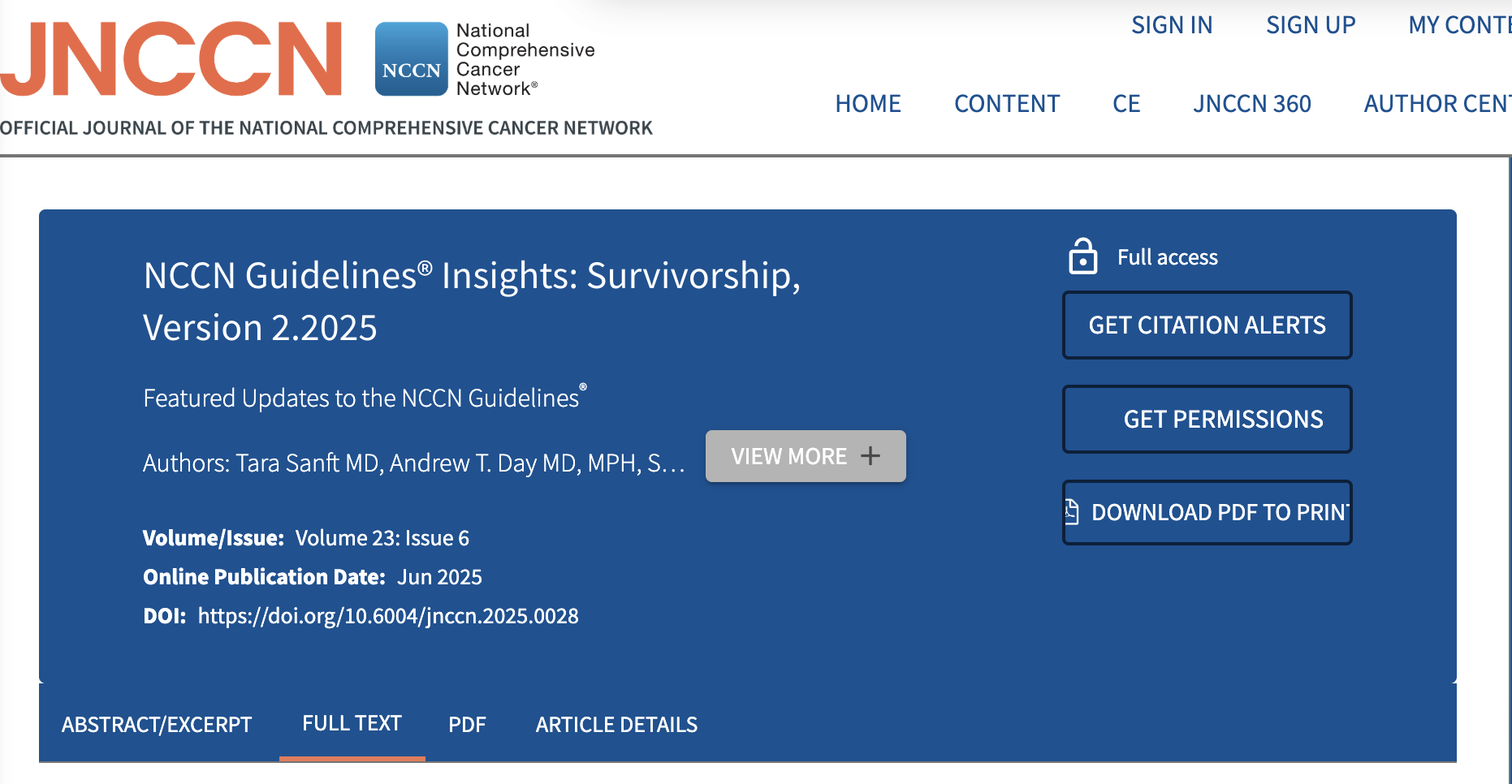
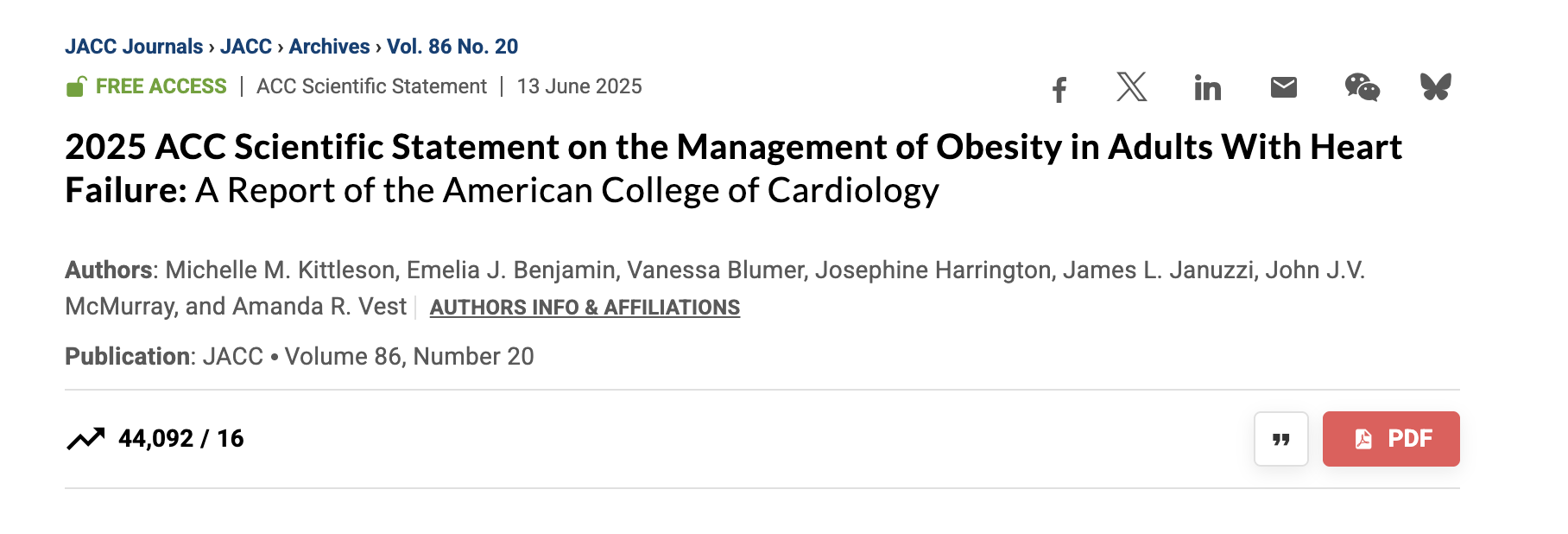
Carlos Areia: Not many trials get cited by Clinical Guidelines, and for the ones that do, it usually only happens two or three years after publication of the main results. This paper, published in March 2025, had two Clinical Guideline mentions a couple of months later: in June by the American College of Cardiology (2025 ACC Scientific Statement on the Management of Obesity in Adults With Heart Failure: A Report of the American College of Cardiology) and the National Comprehensive Cancer Network. This is an incredible achievement; many studies and trials go viral after publication, but only very few are so quickly mentioned in a guideline. This shows the incredible results and work of this trial.
Top Congress Attention
- Structured Exercise after Adjuvant Chemotherapy for Colon Cancer
- Courneya et al
- The New England Journal of Medicine, 393(1), 13-25 – June 2025
- https://doi.org/10.1056/nejmoa2502760
- For a detailed breakdown of the Altmetric attention, click here
A phase 3 randomized trial found that a 3-year structured exercise program after adjuvant chemotherapy for colon cancer significantly improved disease-free survival and suggested longer overall survival compared to a health-education group. At a median follow-up of 8 years, the exercise group had an 80.3% 5-year disease-free survival rate, compared to 73.9% in the health-education group.
Carlos Areia: Despite not being a commercial trial, this was the most famous viral study in our congress data, particularly at the American Society of Clinical Oncology Annual Meeting (ASCO 2025), receiving exceptional positive sentiment and attention in social media, news, blogs and many other attention sources. I must disclose that I am a bit biased due to my Physio background, but I could not have this trial pass without a mention and strong congratulatory message to all involved in this brilliant and really impactful piece of work.
Top Discussed on Podcasts
- Finerenone with Empagliflozin in Chronic Kidney Disease and Type 2 Diabetes
- Agarwal et al
- The New England Journal of Medicine, 393(6), 533-543 – June 2025
- https://doi.org/10.1056/nejmoa2410659
- For a detailed breakdown of the Altmetric attention, click here
The study investigates the effects of combining finerenone and empagliflozin in patients with CKD and type 2 diabetes. Results show that this combination therapy significantly reduces the urinary albumin-to-creatinine ratio more than either drug alone, with no unexpected adverse events reported.
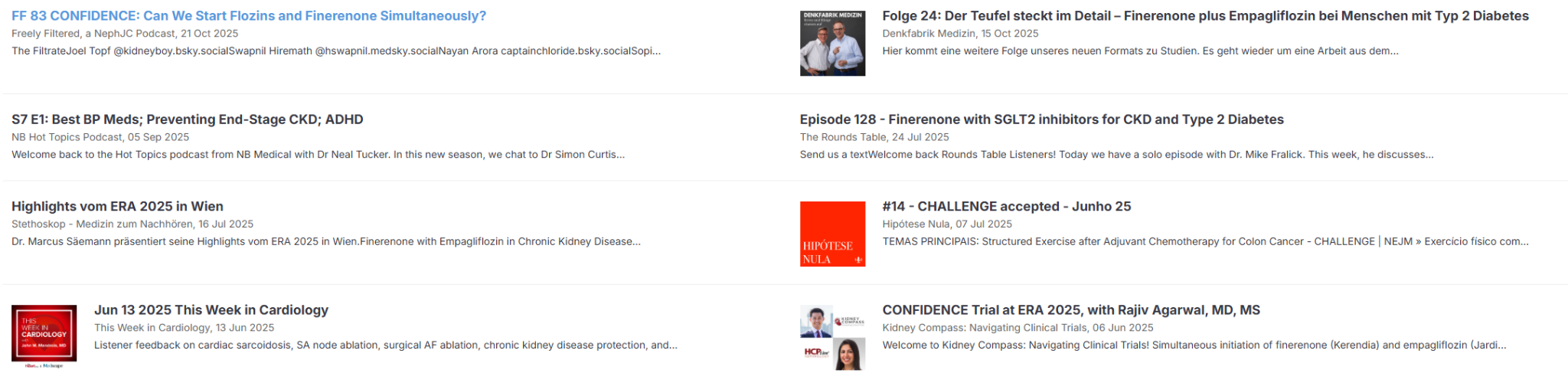
Mike Taylor: Podcasts are a new source for me, and this one is fascinating — it’s been discussed by the diabetes and renal communities, as well as amongst cardiologists. To me, seeing the enormous growth of the podcast as a means of communication and the diversity is extraordinary! This particular paper was mentioned on eight podcasts. Seeing how different therapeutic communities all engaged with this publication is fascinating — in the wild world of scientometrics, the expectation is usually that papers that cross subjects often get lower levels of activity: this paper defies those expectations. Oh, and it’s been discussed in German as well as English.
Top Surveys and Polls
James Dathan: While my two selections may be a little more ‘left field’ (if they are even still in a field!), they do provide really clear examples of how we, as an industry, need to establish what ‘Impact’ means across stakeholders. These two examples show updates and innovations in the ways that we can better assess ‘impact’ as more variables become available for consideration.
- 75% of US scientists who answered Nature poll consider leaving
- Witze
- Nature, 640(8058), 298-299 – March 2025
- https://doi.org/10.1038/d41586-025-00938-y
- For a detailed breakdown of the Altmetric attention, click here
This first article stands out to me due to the extreme sentimental analysis. Looking at only 43% positive against 33% active negative sentiment shows how contentious it can be. An article such as this one, that can split opinion in terms of people supporting, yet still shows an incredibly high overall score (second overall in 2025!), shows the importance of looking at both pieces of information together.
- Bluesky’s science takeover: 70% of Nature poll respondents use platform
- Beiver
- Nature – January 2025
- https://doi.org/10.1038/d41586-025-00177-1
- For a detailed breakdown of the Altmetric attention, click here
This leads me nicely to the second section, which sums up the changing landscape of what ‘Impact’ really means and crucially how it can and will be assessed moving forward. The irony of this article is not lost on me, as it also shows how engagement is changing and the way that we interact with content evolves. Over 7,200 notes on Bluesky is over 25 times the engagement via X – the times, they are a changing.
Top Use of AI* and Longest Title Selected**
- External validation of a digital pathology-based multimodal artificial intelligence-derived prognostic model in patients with advanced prostate cancer starting long-term androgen deprivation therapy: a post-hoc ancillary biomarker study of four phase 3 randomised controlled trials of the STAMPEDE platform protocol
- The Lancet Digital Health, 7(7), 100885 – June 2025
- Parker et al
- https://doi.org/10.1016/j.landig.2025.100885
- For a detailed breakdown of the Altmetric attention, click here
Carrie Brubaker: 2025 saw accelerating deployment of artificial intelligence technologies in therapeutic product development, diagnostics and prognostics, and clinical care. Highlighting this takeaway for the year, this publication reiterates that, indeed, “diagnostic prostate biopsy samples contain prognostic information in patients with, or at high-risk of, radiologically overt metastatic prostate cancer.” But combining disease burden data with assessments in the MMAI algorithm here improved disease prognostication. Not long after publication, the U.S. FDA approved the technology as software-as-a-medical-device. According to the company, this establishes a new product code category for future AI-powered digital pathology risk-stratification tools.
* In a clinical trial setting
** Only a clinical trial focusing on the good people of Llanfairpwllgwyngyllgogerychwyrndrobwllllantysiliogogogoch could hope to compete in the future “Longest Title” category.
Personal reflections from Mike Taylor: After re-listening to our podcast and going through my colleagues’ notes, I’ve found myself reflecting on what we (as the Medical Affairs community) do, and how the environment within which we work is subject to changes. In this blog post and podcast, we’ve seen how new medical approaches — whether gene therapies, the use of AI, GLPs — increasingly dominate conversations around healthcare, and we’ve seen how the omnichannel world is becoming increasingly diverse through podcasts and new platforms such as Bluesky. But it’s not all about new technology: two of our papers here describe the importance of the healthcare professions of nursing and physiotherapy.
It’s also clear that neither do we live in a vacuum — more than ever, politics is becoming part of the world in which we live, with discourse around RNA therapies and gene-editing being skewed by science-skeptic voices becoming dominant, and many communicators abandoning platforms that have become (in)famous for misinformation and negative sentiment. But at least we’ve seen the last of COVID-19 controversies… right?
All data in this article was sourced from Digital Sciences’ Dimensions and Altmetric databases. Click here to learn more about how to leverage online attention metrics to easily understand the real reach and influence of your publications.

