
Key Takeaways:
-
Patient involvement once focused mainly on trials and education.
-
Today, patients actively help shape the healthcare ecosystem.
-
MAPS experts discuss how patient engagement is changing clinical development.
For years, patient involvement in drug development was limited to trial participation and post-approval education. But things are evolving. Patients today aren’t just participants—they actively co-build the healthcare ecosystem.
In today’s podcast episode, experts from the MAPS Scientific & Technical Knowledge Domain dive into a topic that’s transforming clinical development: Patient engagement.
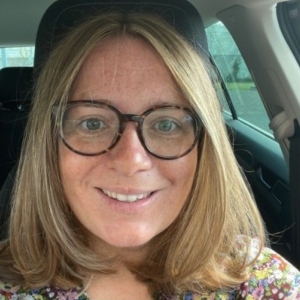
Speaker: Amelie Fassbender, PhD
Global Medical Business Development Lead, Viatris
Medical Affairs Professional Society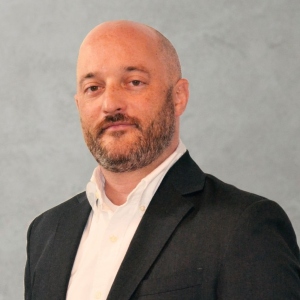
Speaker: Mitchell Silva, PhD
CEO and Co-Founder, Esperity,
Medical Affairs Professional SocietyFollowing is an automated transcription provided by otter.ai. Please excuse inaccuracies.
00;00;05;04
MAPS
Welcome to this episode of the Medical Affairs Professional Society podcast “Elevate”. The views expressed in this recording are those of the individuals, and do not necessarily reflect on the opinions of MAPS or the companies with which they are affiliated. This presentation is for informational purposes only and is not intended as legal or regulatory advice. And now for today’s “Elevate” episode.
00;00;33;14
Amelie Fassbender
Hi everyone and welcome to MAPS podcast, where we explore the evolving role of Medical Affairs in shaping the future of health care. I’m Doctor Amelie Fassbender, Global Medical Business Development Lead at Viatris, and I’ll be your host for today’s episode. Today we are diving into a topic that’s transforming clinical development patient engagement. Let’s face it. For years, patient involvement in drug development was limited to trial participation and post-approval education. But that’s changing. Patients today aren’t just participants. They’re actively co build the health care ecosystem. To explore this further, I’m joined today by Doctor Mitchell Silva, the CEO and Co-Founder of Esperity. Esperity is a patient centric platform founded designed by a researcher living with a chronic condition to empower individuals through symptom tracking, peer supports and access to clinical trials. Welcome, Mitchell. To kick things off, I would love to hear your opening thoughts. Medical Affairs is evolving fast. What are the key shifts, especially around patient centricity?
00;01;52;24
Mitchell Silva
Thanks so much. Thanks for having me. And it’s a pleasure to be here. Now, before diving into the answer to your question, I would like to maybe take a step back and, just go over the concrete activities of Medical Affairs. So the key activities of Medical Affairs include communicating scientific data. That’s about supporting and designing clinical studies to answer important medical questions. That’s also about educating health care providers to make sure that everything is well understood, how treatments work, for example, and how they can benefit. It’s also about reviewing materials, so that they are scientifically accurate and also follow the regulations. And is about gathering real-world insights from patients and clinicians to guide company decisions. So all these activities, are really important to actually understand how Medical Affairs is shifting. As we all know, technology is advancing, at an incredible speed. It’s, at the same time, the science of patient engagement is also involved. It’s really become an academic, discipline on its own. So this means that Medical Affairs will be more strategic, forward thinking. Medical Affairs will also be more collaborative. It will be bridging more disciplines not only within the industry itself, but also beyond that, across different, sectors even. And I also think that at the end, we are in a good wave of patient involvement, evolving in a positive way. But we will only see more of that because, as you also might have realized, and as we see in the environment, have the attention towards patient reported outcomes and especially patient relevant, reported outcomes will only increase over the next two years. And of course, I think, as we all know, digital patients, involvement, will have more digital angles to it. And I also think in general, Medical Affairs will be more digital in itself as well. So the importance of patient involvement will only increase over the next years.
00;04;02;21
Amelie Fassbender
Thank you. So when we talk about redefining patient engagement and clinical development, what does that mean to you personally and professionally?
00;04;12;21
Mitchell Silva
I think a lot of progress has been made when talking about so patient engagement and clinical developments, but I still see that often patient engagement activities are more ad hoc. They’re transactional. They are reactive. While we should actually make sure that they are proactive, that we anticipate. And this is where I think we have to go into the mindset of, setting up a more, instead of a more transactional model. We have to think, how do we go and set up a more structural, sustainable model that really and a continuous basis, gets patients insights. And, where you, as an industry partner or whoever you are as a stakeholder, you continuously engage with patients throughout the different phases in the life cycle. For me, these kind of sustainable models and patient engagement are really built about four pillars. The first pillar is about culture. How do you make sure that, as an organization, as a company, as a drug developer, that you really embrace patient engagement said, you breathe it, you understand what it is. Do you really have it, very clear in your trainings, etc.. So every role in the company can really understand what the benefits are of actually doing meaningful patient engagement. For me, the second pillar is also about infrastructure. It’s very nice to have a good culture, but if you do not have the ways, how do you implement patient engagement? That will lead to nowhere. So infrastructure means what are the SOPs? Do you have the how to guide to interact with patients? How do you deal with patient engagement? On the global level, on the versus on their local level. So all very important to the guidelines, I think, to make sure that you can do hands on patient engagement. And for that, of course you need patient connections. Patient connections means having contracts with patients, having ways to recruit patients. And this in a in a timely manner. And then the fourth pillar for me is all about KPIs. It’s about knowledge sharing. It’s about involving, or being involved in academic projects about, for example, patient preferences. So, implementing all these pillars will really, increase, I think, the uptake of patient engagement in clinical development and will lead at the end to improve access to novel therapies. It will stimulate co-creation. That’s will increase also transparency. And all of this will contribute and improve at the end, the outcomes of patients, which we all want. Of course, as stakeholders in the healthcare ecosystem.
00;06;40;05
Amelie Fassbender
So building on to that, can you walk us through what patient engagement actually looks like during the design phase of a clinical trial?
00;06;48;25
Mitchell Silva
That’s a good question. Then here I think it’s important to note is that when we talk about patient engagement and patient involvement and the design of clinical trials, it’s about co-creation. And even more, it’s about timely co-creation. How do we make sure that we connect to, the teams that we collect, the insights as early as possible? Because at the end, we really want to answer, certain unmet needs that we see in the patient population. And for that, we have to understand the patient journey. How does a patient journey look like? What are the experiences? Where do we see the gaps in the ecosystem? For this, we have to talk to the patients. There’s no other way of getting these types of insights. And that of course when you are actually setting up and designing your trials, you’re also defining your endpoints and your outcomes. And here it’s important to really understand what are you measuring. Are the actually relevant to patients. And one example I like to give is in the field of neuromuscular disease called SMA spinal muscular atrophy, where you, see a progressive degeneration, actually, of your muscles. And often these people, they end up in wheelchairs, and become immobile. And so here you might think, okay, when we introduce a new technology, a new treatment, we should measure muscle force or the ability to to walk as long as you can in your disease pathway. But at the end, when listening and then interviewing patients and parents, we really understand that, there’s one outcome that really, sets it apart from all the observers. And this is the ability to move your hands. If you can move your hands, you can control the device to manage your wheelchair. You can communicate. That’s really about, at the end, improving quality of life. So that’s a nice example. How by listening to patients you can actually adapt certain outcomes in your clinical trial protocol. But of course I think also important is trial burden. When we speak about trial burden it’s really about understanding how the patients experience the trial to set up the sequence of interventions. Of course, you don’t want to make sure that patients have an idea that is too complex. It’s too heavy. So there might be a risk of dropout. So a good, way of actually assessing this is before you. It is here to trial to ask and evaluate and simulate these types of, sequences and interventions and get feedback from patients. I saw a lot of cases actually where based on patient feedback, this, the sequence or certain interventions were actually changed. And that, of course, is also information and communication patients. They are not professionals. And the way that, they use certain medical terminology like physicians do, has you have to make sure that when you communicate to patients that they understand your information. Think about, informed consent forms, think about their language summaries. So it’s very important to also involve patients in the setup. And then the proofreading of these documents to make sure that all the information is understandable for patients. And then I think finally it’s all about making sure that you can, evaluate whether inclusion exclusion criteria are actually or if they make sense for the patient at the end. Because sometimes you might have very stringent exclusion criteria. And by actually discussing this with the patient population, you can actually make sure that you also pay attention to underserved populations or vulnerable populations. So and all of this at the end, has also something to do or will impacts, how, the patients see potential risks of participating or potential, benefits of participating because at the end, the more we can map this patient risk benefits, balance the and how patients view this. We can also understand what or potential drivers or barriers to participate in clinical trials. So the only way to really understand all of these topics that I discuss is to listen to patients, to involve them. From day one of your clinical research.
00;10;53;19
Amelie Fassbender
Great. Yes. So once patients have shared their inputs during the protocol design phase, what does a good feedback loop look like?
00;11;04;18
Mitchell Silva
A good feedback loop, looks like, really feeding back information to the patients who participated, to the advocacy groups who collaborate with at every stage of your partnership, basically, so often, when we see companies that are doing patient engagement on a more ad hoc basis, sometimes it can be seen as check the box exercise. Often these feedback loops are not there. The companies who really have a sustainable framework and, a long term strategy to collaborate and engage with the patient population, they really have built this feedback loops into their daily routines. This means when you have done a patient insights exercise, you understand, the, the insights and you tried to translate them to for example, how you will, improve certain documents or how you will, that certain, outcomes or endpoints of a trial, it’s important to, also explain why did you take, these consideration or items into considerations or why not, so by feeding back, you also, at some point educate the patient population, and then help them to, to see for future trials why certain considerations or maybe not uptake in and because everything has a reason. So it’s very important to to go into discussion and to see this also as something that goes far beyond actual, patient insight activity itself. So the feedback loop is really critical, I think, when talking about a sustainable patient engagement framework.
00;12;40;16
Amelie Fassbender
And are there any advantages to maintaining those relationships for long term even after the trial design phase is completed?
00;12;50;09
Mitchell Silva
That’s a very important topic, I think, because clinical trials are of course, very important in developing new medications. But once the trial is over, you go to the, the health technology assessment, you go to market authorization. Your medication comes on the market. And then each of these phases, there’s actually also, meaningful patient engagement activities that can be done. Think about, communicating research results. The moment that public results are available, that the drugs are approved, that might be interesting to collaborate with patient groups, advocacy groups or patient organizations to see how you can actually spread information in a compliant way. But patient, involvement can also facilitate, for example, the collection of real-world evidence. They can help to create insights to set up support programs. Once your medication is available on the market. And the so it can help to inspire new research based on actual real life experiences. So patient engagement and clinical development is very important. But it’s also important to see that the moment that you have filed from, HDA and you go towards market authorization, there are also a lot of benefits to involve patients in a continuous basis.
00;14;09;07
Amelie Fassbender
Can you share some real world examples of how patient centric approaches have been successfully applied in clinical trials?
00;14;19;18
Mitchell Silva
I can share three examples of, how patient engagement was actually implemented. Then maybe a first example is more on the a systematic framework level. And this was a global big pharma company who had set up a patient partnership program on the global level. This was interesting because this patient partnership program consisted out of a network of patient experts that had a contract with this company. And the moment that, there was a need for patient insights, this whole system was activated. And within 84 hours, you could actually, as a company, get patient insights to help your clinical development teams. Address certain, issues or certain reflections they had. So it was a nice example of how from structural level, you can actually and that’s patient engagement to optimize workflows, in your clinical teams. The second example I would like to give is maybe, something more related on the clinical trial design level. One so we we heard actually at a trial, that was, being developed or a trial that was being set up for the development of a drug for psoriatic arthritis, where a certain questions were reflecting on, how do you feel? About, your psoriatic arthritis in terms of pain, in terms of energy, etc. and depending whether you were more up psoriatic patients versus a patient with arthritis, the interpretation to certain questions completely different and where they were completely different. And here, what came out of this interview was that, and the interviews was that by actually changing certain phrases, how or how you phrase certain questions, that will really impact greatly how patients respond to that question. And I think this is a nice example, because even though this initial question was based on a validated questionnaire based on the context, of this clinical trial for psoriatic arthritis patients, patients would interpret the question differently, meaning that you would end use noise in your data. So again, listening to patients understanding how do they interpret certain questions really helps at the end, in terms of data quality, I think, which at the end will impact as well, potential significance levels that you can that you can see. And maybe a third example is more in the field of medical devices. So medical devices play a very important role, of course, for a lot of patients think about, cardiovascular disease, for example. And, there was one trial, I think it was called the chief heart failure trial. It was set up during the Covid pandemic. And I think it was one of the first really fully decentralized trials where remote monitoring was, really implemented. Without having face to face interactions with patients, meaning, the selection happens remote, the drug delivery happened remote patient monitoring happened remote via devices. And of course, you can only do that if you really have mapped completely the patient expectations. The patient experiences. So I think it’s a very nice example how by listening to patients, you can really make sure you can implement a fully decentralized trial. With actually Atienza, having a successful recruitment and making sure, in this case, reaching your, your outcomes. So again, nice examples. How by listening to patients you can really shape different levels of development not only and in drugs, but also in the device setting.
00;17;57;24
Amelie Fassbender
This is so wonderful to hear, but could you also shed some light on the challenges researchers face when trying to implement these new strategies?
00;18;07;14
Mitchell Silva
Of course there are a lot of challenges as well when talking about patient engagement. So as mentioned before, traditionally patients are more rather a subject and a trial. So they participate. So they’re not really a co-creator. So we see luckily that this is changing. But when looking to the challenges often, it really comes back to, not really understanding clearly. Okay. What can I do? When I am, when I have certain questions about patients, can I reach patients? So there’s a whole kind of regulatory compliance question there. And sometimes, of course, it’s, is perceived as very complex. And this complex, we live in a very complex environment in health care. You have, regulations, from email, from FDA, you have local regulations, you have internal SOPs. And this can really, give the perception that everything is so complex. And this might hold people back from really doing meaningful, patient engagement. Luckily, I think we see regulations that are actually favoring now patient engagement. So I think this is something that is very positive and will stimulate actually people to think about how can we stay compliant, how can we obey the regulations, while also, of course, getting insights in a timely manner? And of course, I think another challenge that I often see is that sometimes patient engagement activities can be perceived as time consuming. And I think this goes back to the pillars that I mentioned before, that if you anticipate in a way that you set up your network, that you set up your contractual obligations, that you set up everything you have to do to be compliant upfront, you can really answer this question of, how does, patient engagement impact, the, the, the study timelines. So again, anticipation is key to actually mitigate, this perception of, of the time, consuming aspect of perception, of time consuming aspect of patient engagement. And then I think, finally, it’s also, not always easy to find the right patients to participate. So depending on where you are, you have to make sure that you have representative patients. Of course. So the work of patient experts, do you work with individual patients? Do you work with advocacy groups? What is the difference collecting certain insights or the ethical considerations that are important. So a lot of questions have to be solved. And that’s why it’s so important to work with professionals in this field, to work with people and talk to colleagues in your space who have maybe done meaningful patient insight generation in the past, because they can really inspire you to go over, certain challenges and to really help you to achieve your, your outcomes at the end.
00;20;56;08
Amelie Fassbender
Yes, and I recently came across this I hi ready projects. It sounds like a major step toward more inclusive clinical research in Europe in general. Can you share what it’s all about and why it actually matters?
00;21;13;22
Mitchell Silva
Absolutely Ready stands for Research in Europe and Diversity, and it’s a public private partnership funded by the Innovative Health Initiative, which is European, funding, project. And it is all about making trials in Europe more inclusive and equitable. It’s really important because we have to assure that, data collected in clinical trials, are very representative that we represent as much as possible, the general population in these clinical studies. And historically, unfortunately, we see that trials have not sufficiently reflected the diversity of the population or or certain populations in, clinical trials. And of course, this will lead to certain gaps. The moment that your drug comes on the market, you actually have different readouts, etc.. So again, how can you anticipate that’s why this diversity aspect is so important, because the more we can have inclusive, trial participation targeting, underserved populations, we will also reduce the risk that we will actually then run up into certain gaps that we didn’t see before because the selection was too narrow initially. And I think that Red is doing a really great job of trying to change this. That’s, really focusing on the underserved population. It’s involving different stakeholders, patients, organizations. There’s healthcare providers and regulators, there’s sponsors involved, and it’s all about co-creation. And it’s quite a big consortium because there’s over, I think, 73 organizations involved, over 18 countries. So it’s really a big step forward in Europe to lead the way in patient centered innovation.
00;22;54;11
Amelie Fassbender
That’s indeed a very powerful initiative. It’s so encouraging to see such a large scale effort focused on making clinical research more inclusive. So we just talked about how involving patients in clinical trial design can lead to more relevant and inclusive research. That same shift towards patient centered thinking is starting to show up in medical education, too. Can you talk about how universities are starting to include patients in mandatory sessions for medical students, and why that actually matters?
00;23;32;23
Mitchell Silva
This is a very important topic as well. And I’m actually very happy to see that, there’s a lot of things happening on this front. So one example of, patient engagement and research, and educational setting comes from Denmark, where they have set up, module called I think it was Patients and Society where patients were asked to not only share their story, but to really co educate towards students. That was really about, I think, sharing their, their experience living with the condition. But also what should the suggestions they have towards, for example, physicians in education were to pay attention to during the consultation or what questions to ask. So, I think it’s important to see that these initiatives are not only about having a patient’s, talking in the classroom when the the student being passively listening to these patients, but really involving them, making sure that they can also reflect on, the stories of patients and also carry this forward to scenarios where imagine there would be at one moment doing consultations with patients, how they do these kind of sessions actually help them to reflect and sorts of situations to make sure that they really, provide optimal care. And I think Europe is also investing quite some, money, actually, and leveraging and then, facilitating, patient engagement activities in an education. And I think there’s about, two other projects that were there. One is called Pulpit Program. This is a European Horizon project, which was really designed to create a framework for public patient involvement and interprofessional education. So, I think the aim was really to educate, the, or to provide the educational framework for, institutes to adopt this kind of frameworks to, provide patient engagement and curricula of different types of, of medical students, nurses, different type of directions, where patient involvement is really important. So again, I think this highlights the, the importance of patient engagement, to, to do this actually early on, even when you are on the school, bank. So not to wait until you are working for a company to think about patient engagement, but really to stimulate the minds to start as early as possible, because at the end, that’s also our attitude. And by involving this type of, or being involved in these type of activities, you can really have a proactive attitude towards patient engagement that you can carry forward in your career.
00;26;07;25
Amelie Fassbender
Yeah, great. So given the how central patient engagement has become, not just in clinical trials, but also in the broader medical education initiatives, as you mentioned, it’s clear that empowering patients with the right tools and information is key to better outcomes. That naturally brings us to the role of technology, especially. I said, how is I reshaping remote health care, particularly in terms of improving patient engagement, diagnostics and real time monitoring?
00;26;43;14
Mitchell Silva
This is, again, a really great question. AI is really one of my passions, and I think we all realize that it’s really it’s it’s changing the way we, we live, basically, it’s changing education. It’s changing the way we work. And this is also valid for health care. So AI is really becoming widespread. So also for patients, also for physicians, it’s making remote care smarter. It’s making remote care, some more connected as well. It’s helping doctors to diagnose faster. That’s helping to monitor patients in real time and predict outcomes. So I has really a lot of, potential, applications. And I think it’s already being implemented as well. And thanks to AI, we can really, personalize care plans much more. We can make sure that patients get more personalized reminders. We can make sure to have access to digital twins that can also predict certain outcomes and steer behavioral change. So it’s really interesting to actually live in this era where we will see more adoption of digital solutions that are driven by AI, and that Europe is also investing, again, the lots in these kind of projects in the health care. I think there was a Swedish, Norwegian project called, Contiki Projects. This is a project which was financed by the Interreg program. Really, trying to set up, mechanisms and then, then use cases to accelerate, access to health care and adoption of technologies and health care using AI. Another project, I think, was the Avis project, which is another European project, aiming to increase the, access to health care in rural areas using AI. So I has potential AI is transforming lives as giving hope at the end to patients. And we also see that it’s becoming a strategic, objective, from, for example, the European Commission to set up such use cases.
00;28;41;23
Amelie Fassbender
As AI continues to reshape health care, how can we ensure that patients, especially those from underrepresented communities, are actively involved in shaping these technologies?
00;28;56;27
Mitchell Silva
This is a very important topic as well. And we have to be mindful that, we don’t, induce let’s call a I divide. So we all heard about the digital divide. Of course, when we are accelerating the adoption of AI, we might first that certain populations will fall out. And I think very similar to drug development, we have to really include patients of diverse backgrounds into the design of these tools. So it’s exactly the same principles of co-creation that apply. We have to reach the people that are living with conditions. We have to make sure that the ones who will use this technology can co-create, this technology that can test this technology, and that’s really about us. So, that’s a that’s really about including these patients, not only in testing, but also in setting up certain models. Because we know that I can be biased if you do not have the right training sets. So again, we have to really consider diversity and inclusion, I think, and also the training phases of these different AI models. So again, patient involvement and drug development at the end it’s also about patient involvement and technology. We really have to think in terms of stakeholders. Quite maybe in a broader sense, it’s not only physicians, patients, nurses, it might also be tech developers. It can be user experience specialists that we should consider actually, in this co-creation workshops, when talking about patient engagement activities. So, Amelie, maybe before wrapping up, I would like to flip script, as we are looking at, how do you see Medical Affairs evolve the next few years, let’s say by 2030, especially in terms of deepening the patient and deepening patient engagement in clinical trials?
00;30;45;24
Amelie Fassbender
Yeah, sure. So Medical Affairs is evolving into a strategic and patient centric function, especially in clinical trials. Medical teams collaborate across functions to identify these evidence gaps and also in cooperating patients reported outcomes and use AI and digital tools to personalize engagement. This approach not only improves trial design and recruitment, but also accelerate access to therapies and enhances the overall impact on patients outcomes.
00;31;23;23
Mitchell Silva
So the future really looks bright for Medical Affairs.
00;31;26;27
Amelie Fassbender
Yes, indeed. So that brings us to the end of today’s episode. We have explored how patient engagement is being redefined, from clinical trials to medical education, and even through the lens of AI and remote care. What’s clear is that patients are no longer just participants. They co-creators, educators, and partners in shaping the future of health care. I would like to give a sincere thank you to our guest, Mitch, for sharing such insights. And we’ll words, examples and thank you to our listeners for joining us on this journey. Until next time, stay curious and stay connected.
00;32;12;02
Mitchell Silva
Thank you. Amelie.

